Upper endoscopy is the examination of the pharynx, oesophagus, stomach and duodenum, in that order, by entering through the mouth. It is a safe and effective method used to investigate the cause of persistent and troublesome complaints of the oesophagus, stomach and duodenum and, when necessary, to reach a definitive diagnosis by taking a biopsy for microscopic examination.
What Is Endoscopy?
During the procedure the inner walls of the organs are examined carefully. Biopsies are taken with special instruments from tissue changes, ulcers or any area that looks different from normal, and the tissue samples are then examined under the microscope at the cellular level.
Endoscopy is not a painful procedure. Because air is given into the organs as the scope advances, you may feel some tension. Since the windpipe runs separately from the oesophagus, the patient has no problem breathing.
When Is Endoscopy Performed?
- Upper abdominal pain that does not go away with treatment
- Difficulty swallowing
- Diseases causing bleeding
- Reflux complaints
- Nausea and vomiting with no identified cause
- People at risk of stomach cancer
- Ingestion of toxic substances
- Investigating the cause of diarrhoea (coeliac disease, etc.)
- Locating the primary focus of a spread cancer
- Swallowing a foreign object
- Detecting and diagnosing stomach conditions such as polyps, ulcers and hernias
What Is Colonoscopy?
Colonoscopy is the partial or complete examination of the large intestine with a special instrument that has a light and camera at its tip. Used to detect problems and abnormalities in the large intestine and rectum, it is one of the best diagnostic tools of today's technology and is also accepted as a treatment option.
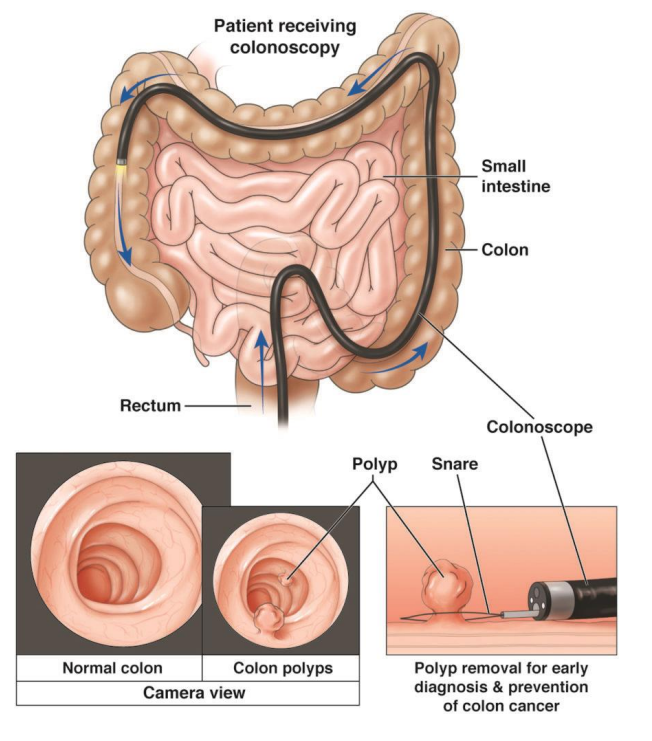
The colonoscope is a thin, flexible instrument with a camera at its tip; as the doctor advances it through the bowel, all structures inside can be seen in detail on a screen. Colonoscopy gives very good results in diagnosing and preventing disease, and many conditions can be detected at an early stage. Bowel polyps, cancerous cells and abnormal tissue can be seen clearly, and the procedure is now far more comfortable than in the past.
How Should the Diet Be Before Colonoscopy?
Before colonoscopy you need to follow a diet according to your bowel habits and stay away from high-fibre foods. People with constipation may need to follow the diet for longer, while it can be shortened for people with regular bowel movements. Patients with constipation may be started on supportive medication earlier.
Contrary to popular belief, patients do not go hungry for three days before colonoscopy. Depending on eating habits, food is digested and its residue passed within 3–5 days. We recommend a low-residue diet for 3 days before colonoscopy so that less residue builds up in the bowel and the laxative taken on the last day can clean the whole bowel properly. The better the bowel cleansing, the more comfortable the procedure and the better the bowel can be assessed. If the bowel remains unclean, the procedure has to be repeated — which neither the patient nor the doctor wants. During these 3 days high-fibre foods are restricted, but there is no harm in eating protein-rich foods. Red meat, milk and dairy products, white meat and eggs are nourishing because they are rich in protein; they are almost entirely absorbed and leave no residue, so they can be eaten freely. Vegetables, fruit, nuts, legumes and bread, which leave a lot of residue, should be avoided. On the day before the procedure, smooth, liquid-rich foods are more suitable, and clear drinks such as meat or chicken broth, tea, instant coffee, strained compote juice, pulp-free fruit juices and linden tea can be consumed. After a light meal at around 18:00 in the evening, the bowel is completely emptied with laxative medication.
Who Should Have a Colonoscopy?
Colonoscopic procedures are used sometimes for diagnosis and sometimes for treatment.
Diagnostic uses:
- Active or occult bleeding from the rectum
- Inflammatory bowel diseases
- Suspected polyps or cancer
- Unexplained abdominal pain
- Changes in bowel habits
- Family history of gastrointestinal cancer
- Investigating bowel involvement of rheumatological and endocrinological diseases
Therapeutic uses:
- Polyp removal
- Treatment of superficial cancers
- Treating strictures
- Treating bleeding
Information and appointment
For information about this department and to book an appointment, contact Mamak Su Medical Center.